Saturday, January 31, 2026

Global Goal 16: Peace, Justice, and Strong Education

 Hey everyone! So I am sure most of you have social media, and or have seen the news lately with all that's going on all over this country. I feel as though it is only fair to bring it up towards my importance for Goal 16. With ongoing issues related to violence, inequality, and lack of trust in government and legal systems, this goal stood out to me as one that directly affects people's everyday lives. Goal 16 works towards creating safer and more inclusive communities by protecting human rights, reducing violence, and making sure everyone has access to justice. 


I believe goal 16 is extremely important because peace and fairness are the foundations for all other forms of development. When people do not feel safe  or don't trust institutions, it becomes much harder for communities to grow socially, economically, or environmentally. I feel connected enough to share about the blog post for SDG 16 as it visually showed how peace and justice start at the community and individual level. Keep in mind, the blog post for SDG 16 was made by, Delhi Public School, Lava, Nagpur India. The focus on legal literacy, community based peace-building, and anti corruptions initiatives directly reflects why I chose this Global Goal. 


In  today's world, where violence, misinformation, and lack of trust in institutions are common issues, these solutions feel realistic and necessary. I especially liked how the post highlights individual actions such as staying informed, engaging in dialogue, and advocating for change. These examples shows that students and everyday people can play a role in building peaceful and inclusive societies and not just governments. This reinforces my believe that Goal 16 is about real-life impact and collective responsibility across countries and cultures.

Quality Education

Global Project

 Hey everyone! I wanted to talk about the Global Project that stuck out to me and I want to bring awareness too. I chose to look at the Quality Education Plan. This not only stands out to me but also has me wanting to help provide quality education. I'm currently studying to become an elementary teacher and I think it is very necassary that everyone has the equal opportunity to equal and free education. 

Project inspiration

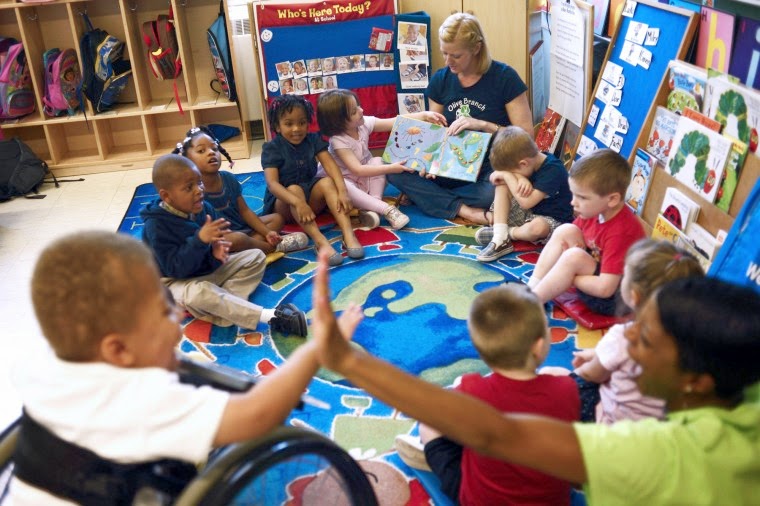
Inclusive classroom, Boys and girls playing togther while learning and welcoming one another.After taking a close look at the previous projects, Lauren Provenzano's plan stood out to me the most. She emphasizes safe spaces in clasrooms, open communication, and accommodations to classrooms as being ways to provide quality education. With safe spaces for times when students feel overwhelmed, it will allow the student to be able to relax and come back to the lesson and ready to learn without disrupting the class. Open communication allows a teacher to student relationship form, promoting a positive and healthy leanring environment. Finally with accomodations it allows students with disablililties or others with not equal opportunity still be able to thrive in a learning environment. 

My Thoughts

I really liked and agreed with her porject. It was very inspiring and thoughtful. Along with that I liked how at the end of her project she put what she would implement in her classroom to provide a quality education for her students. These three things were a calm corner, felxible seating, and an opportunity for the students to communicate with her. 

I feel that it is very necassary that every perosn has the opportunitiy to have a free, acessable, quality education in any space. 

Below I will link Lauren Provenzano's porject and an artcle I found by the IDRA who dives deeper into this topic. 

Links

IDRA

Lauren Provenzano's Project

Friday, January 30, 2026

Quality Education SDG4

Students Working in an Inclusive Classroom


Hi everyone, today I am writing about a Goal Project that is important to me. As an inspiring teacher and current paraprofessional. Quality Education stands out to me. After previewing the Goals Padlet, the Inclusive Classroom by Brianna Bott is the project inspiring me the most. 

Ms. Bott creates a safe and comfortable environment in which students can learn daily. The classroom includes sensory materials such as fidgets and small toys, different seating options for the children's choice of what will make them more comfortable, calm corners for when little minds need a break, standing desks, and handicap essential desks. The classroom also supports non-verbal children and those who speak other languages with screen readers. 

It is important that each child feel included and destressed enough to learn and socialize through out their day. Having this support for children in a class raises the quality of education in a class and lowers escalated behaviors insuring everyones day moves smoothly.

I am attaching an article from ED.gov on the importance of inclusive classrooms titled: The Advantages and Challenges of Inclusive Education: Striving for Equity in the Classroom for more information on this topic. I am also attaching the video by Ms. Bott on her beautifully designed classroom.

Decorative
ED.Gov Article

Goal Video


Thursday, January 29, 2026

goals project climate change Sam citta

  How dredging and sand replacement impacts climate change

What’s Happening in Margate?

Lately, I’ve been thinking a lot about what’s happening to the beaches in my town, Margate. Every year, sand is dredged from offshore areas and placed back onto the beach. People say this helps prevent erosion and makes the beach look nicer for tourists, but from what I see, it doesn’t really solve the problem. Instead, it seems to disrupt the natural environment.

Environmental Impacts of Dredging

I walk past the beach often, and the changes are noticeable. When sand is constantly moved around, animals like crabs and plants that depend on stable conditions get disturbed. This matters because these species are part of the beach ecosystem. It feels like decisions are being made based more on appearance and short-term protection rather than what is best for nature.

A Global Issue, Not Just a Local One

This problem isn’t limited to Margate. Beach dredging happens in many places around the world. While it’s meant to protect coastlines, it can actually damage ecosystems, increase flooding over time, and contribute to climate change impacts. It’s surprising to realize that what’s happening in one small town connects to environmental problems on a global scale.

 
Why This Feels Personal

Seeing these changes makes climate change feel real to me. It’s not just something happening far away, it’s affecting my town, local wildlife, and people who live here. It shows how local actions can have long-term consequences, even when they seem small at first. This sand replenishment operation costs new jersey millions and with how some people suffer in this country I believe we can put that money elsewhere rather than doing a short term fix that is only gonna end up being worse in the long run.

Why Accessibility and Awareness Matter

Just like environmental issues, accessibility is about inclusion. When we design content or
whether it’s beaches or blog posts ,we make sure everyone can understand and engage. Paying attention to accessibility and environmental impact shows not just responsibility but more importantly respect for others and our environment. 


https://padlet.com/JenWilliamsEdu/final-goals-projects-2025-r7ny4mxaypin1zy3/wish/yEPVZknvlYE1Qb0Y

https://www.stockholmresilience.org/research/research-stories/2025-04-02-how-sand-mining-threatens-our-planet-and-what-we-can-do-about-it.html

https://www.youtube.com/watch?v=VXPUJmmJRIE

Monday, January 26, 2026

The Goals Project: Sustainable Math & Energy Exploration” by Aya AlTuhl


One project on the Goals Project Padlet that really caught my attention is The Goals Project: Sustainable Math & Energy Exploration by Aya AlTuhl from Abu Dhabi, UAE. This project focuses on SDG 7: Affordable & Clean Energy and shows how math can connect to real-life issues in a meaningful way.

I liked how this project connects math topics we normally learn in class, like proportional relationships, unit rates, and probability, to renewable energy. For example, students calculate how much energy solar panels can produce over time, compare wind turbine efficiency using unit rates, and look at how weather affects solar farm performance. These activities help show that math isn’t just numbers on a worksheet, it’s a tool we can use to understand the world.

The hands-on part of this project stood out to me too. Students build wind turbines using recycled materials, measure wind speed and voltage output, and then graph their results. This combines math, science, and engineering in a way that feels engaging and practical. I think projects like this make learning more interesting because students get to test ideas and see real results.

I also appreciate how this project connects sustainability with everyday learning. Instead of treating clean energy as a separate topic, it’s woven into math lessons. This makes it easier for teachers to bring global goals into their classrooms without completely changing their curriculum.

You can view Aya AlTuhl’s project on the Goals Project Padlet.
Image of a wind turbine made by students


Overall, this project is a great example of how math, sustainability, and hands-on learning can work together. It gave me ideas for how global goals can be integrated into regular classroom lessons in a simple but powerful way.

Welcome to Web Tools for Global Learners

 Dear Students,

Welcome to the start of an exciting journey in our course, Web Tools for Global Learners! This blog will serve as a collaborative space where we explore, share, and reflect on innovative tools and strategies that empower global education. Think of this platform not just as an assignment hub but as a growing repository of ideas that you and your peers can continue to reference and expand upon, even beyond this course. Educators all over the world have their students blog as reflective practice and to show off their creations to a wider audience. 

Your Role as a Contributor
As pre-service teachers, your voice has immense potential to inspire and inform. Each blog post you create will be a valuable resource—not only for your fellow classmates but for other educators seeking fresh, effective ways to integrate web tools into their teaching. By sharing our insights, reflections, and curated resources, you’re contributing to a larger conversation about global learning and digital pedagogy.

Image of using copyright-free images


What Makes a Great Blog Post?
For every blog post, you will be assigned a specific topic. Here are some key elements to keep in mind as you craft your entries:

Informative and Engaging: Write in a way that educates and motivates your audience. Share your unique perspective while maintaining a professional tone.

Link to Resources: Include at least two links to reputable, high-quality resources. These could be articles, lesson plans, tools, or research studies related to your topic. Always ensure your links are relevant and add value. You can see I have added some links below.


Use Copyright-Free Images: Visuals enhance your posts and make them more engaging. Use only copyright-free images, and be sure to provide proper attribution when necessary. Websites like UnsplashPixabayCanva, and Wikimedia Commons are great starting points. I created this image in Canva. 

Reflective Thinking: Go beyond surface-level descriptions. Reflect on how the tools or strategies you’re discussing can make an impact in a global learning context.

Why This Matters
As educators in the 21st century, it’s crucial to think critically about the tools we use and how they align with educational goals. Your blog posts are an opportunity to model the ISTE Standards for Educators and demonstrate the skills needed to inspire students and foster a culture of global collaboration. As I was learning, I leaned heavily on other educators in my PLN to learn about the latest classroom tools and best approaches for use. Blogging and reading other teacher's blogs helped me to hone my practice as an educator. 

Let’s Get Started
I encourage you to approach each assignment with curiosity and creativity. Your contributions will help us build a vibrant and resourceful community of learners. Feel free to comment on each other’s posts, ask questions, and share feedback. Together, we’ll make this blog a dynamic and valuable learning space for all.

Here’s to a great semester of learning, sharing, and growing as global educators! Let’s make it count.

Michelle Wendt, Instructor, Web Tools for Global Learners